Luxury Slipcase Boxes for Collections and Sets
A slipcase is the packaging equivalent of a bookshelf. It holds a set of items together, presents them as a deliberate collection, and stays in use long after the purchase because it belongs on display rather than in a recycling bin. Luxury Slipcase Boxes are how publishers, premium brands, and gifting companies turn several separate products into one considered object.
The Visions Packaging is a direct manufacturer of custom packaging boxes in the USA, producing slipcase packaging for publishers, cosmetics brands, spirits companies, stationery makers, and corporate gifting programs.
What Makes a Slipcase Different
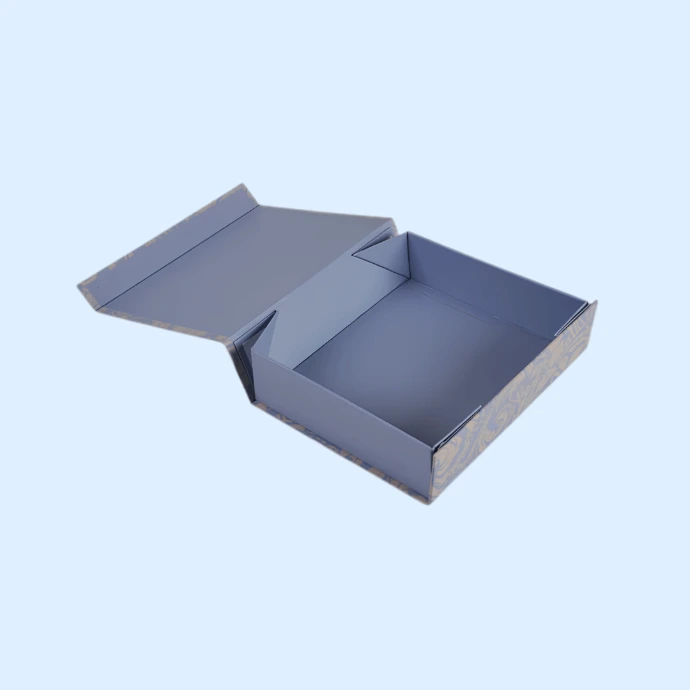
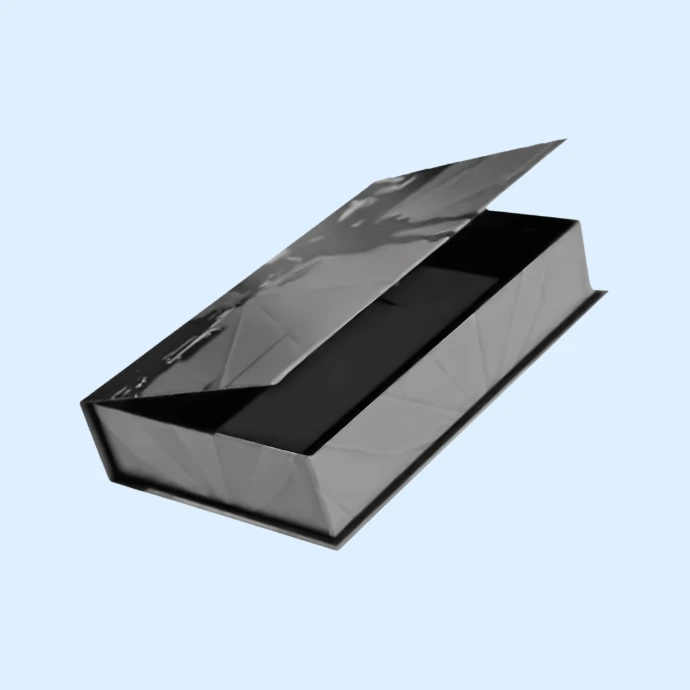
A slipcase is a rigid five-sided case, open at one end, into which contents slide. There is no lid and no closure — the fit itself holds everything in place.
That simplicity is the appeal. There is nothing to break, nothing to fasten, and nothing that wears out. The recipient slides the contents out and slides them back, which means the packaging continues to be used indefinitely. For a brand, that is ongoing visibility at no additional cost. A slipcase sitting on a shelf in someone’s home or office keeps working for years.
Precision Tolerances Make or Break the Format
The entire quality of a slipcase comes down to fit. Too tight and contents scuff or jam. Too loose and items slide out unexpectedly or rattle, which immediately undermines the premium impression.
We build slipcases to precise internal dimensions calculated from your actual contents, accounting for the thickness of the items, any wrapping or sleeves they carry, and the small tolerance needed for smooth movement. For sets where items are added over time — a subscription series or a collection released in stages — we build to the full assembled dimension so the case works from the first item to the last.
Spine Printing and Shelf Presence
The spine is the slipcase’s greatest advantage over other formats. When a case sits on a shelf, the spine is the only visible surface, and it works exactly like a book spine — a permanent, vertical piece of brand real estate in someone’s home.
We design spines with the same care as front panels. Foil-stamped titles, embossed logos, and printed series numbering all reproduce cleanly on the narrow surface. For collections released in sequence, consistent spine design across the range creates a set that looks deliberately incomplete until every volume is owned, which is a genuinely effective driver of repeat purchase.
Materials That Suit a Long-Lived Object
Because slipcases stay in use for years, material durability matters more here than in packaging that gets opened once.
Rigid greyboard wrapped in specialty paper is the standard construction. Cloth and bookbinding-style wraps give a library-quality feel that suits publishers and premium editions particularly well. Soft-touch laminated papers provide a smooth, modern surface. Textured linen and felt finishes add tactile character. Uncoated natural stocks suit minimalist and craft positioning.
For cases handled frequently, we recommend finishes that resist scuffing at the open edge, which is where wear appears first.
Structural Variations
A standard slipcase is open at one end. Several variations extend the format:
- Double-sided slipcases hold two items back to back.
- Slipcases with a thumb cut make removing a single tight-fitting item easier.
- Slipcase and tray combinations pair an outer case with a rigid inner tray, giving structure to loose or irregular contents.
- Slipcases with internal dividers hold several smaller items in fixed positions.
- For very heavy sets, we specify thicker board and reinforced construction so the case holds its shape under load.
Printing That Works Across Five Surfaces
A slipcase presents front, back, spine, top, and bottom surfaces, and unlike most packaging, several of these are visible simultaneously when the case is handled or displayed.
Our in-house offset and digital printing with CMYK and PMS matching keeps your palette exact across every panel and every reorder — important for collections produced in stages over months or years. Fine typography, illustration, photography, and pattern work all reproduce sharply on rigid wraps.
Finishing Options That Justify the Format
Foil stamping is the signature finish for slipcases, particularly on spines and front panels, where gold and silver deliver the immediate impression of a permanent, collectible object.
Embossing and debossing add dimension that survives years of handling. Spot UV over a matte base creates contrast that becomes visible at an angle. Cloth wrapping with a foil-blocked title is the classic premium combination for publishers and limited editions. Contrasting interior surfaces add a discovered detail when contents are removed.
Who Slipcase Boxes Work For
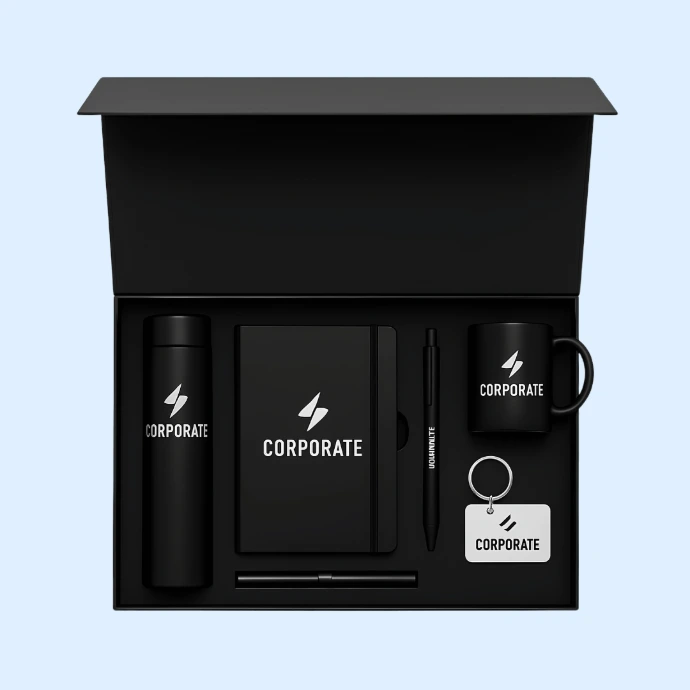
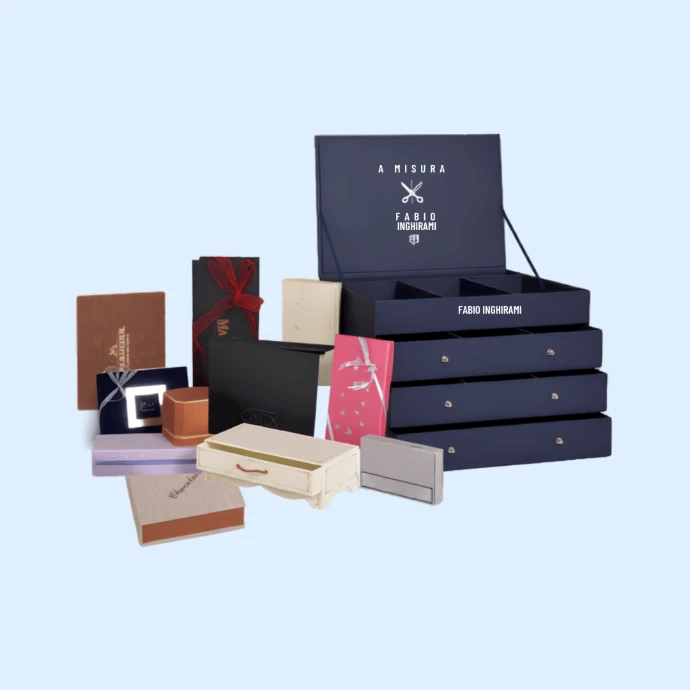
Publishers use them for box sets, special editions, and series collections. Cosmetics brands use them for palette collections and discovery sets. Spirits companies use them for bottle and glass pairings. Stationery brands use them for notebook sets. Corporate gifting programs use them for multi-item client gifts that recipients keep on a desk. Any brand selling a collection rather than a single item has a reason to consider the format.
Wholesale Pricing and Turnaround
Direct manufacturing means our pricing reflects production cost without distributor margin. Minimum order is 50 boxes, which makes limited editions and small collection runs practical, with unit pricing improving significantly at volume.
There are no die charges, plate charges, or setup fees. Free graphic design and free shipping across the USA are included. Standard turnaround is 15 to 18 days after final approval, with a 10 to 12 day rush option.
Contact The Visions Packaging for a free quote and a slipcase built to stay on a shelf.